Journal · October 24, 2026
Shibamata Day Trip: Taishakuten, Yamamoto-tei and the Yagiri Ferry
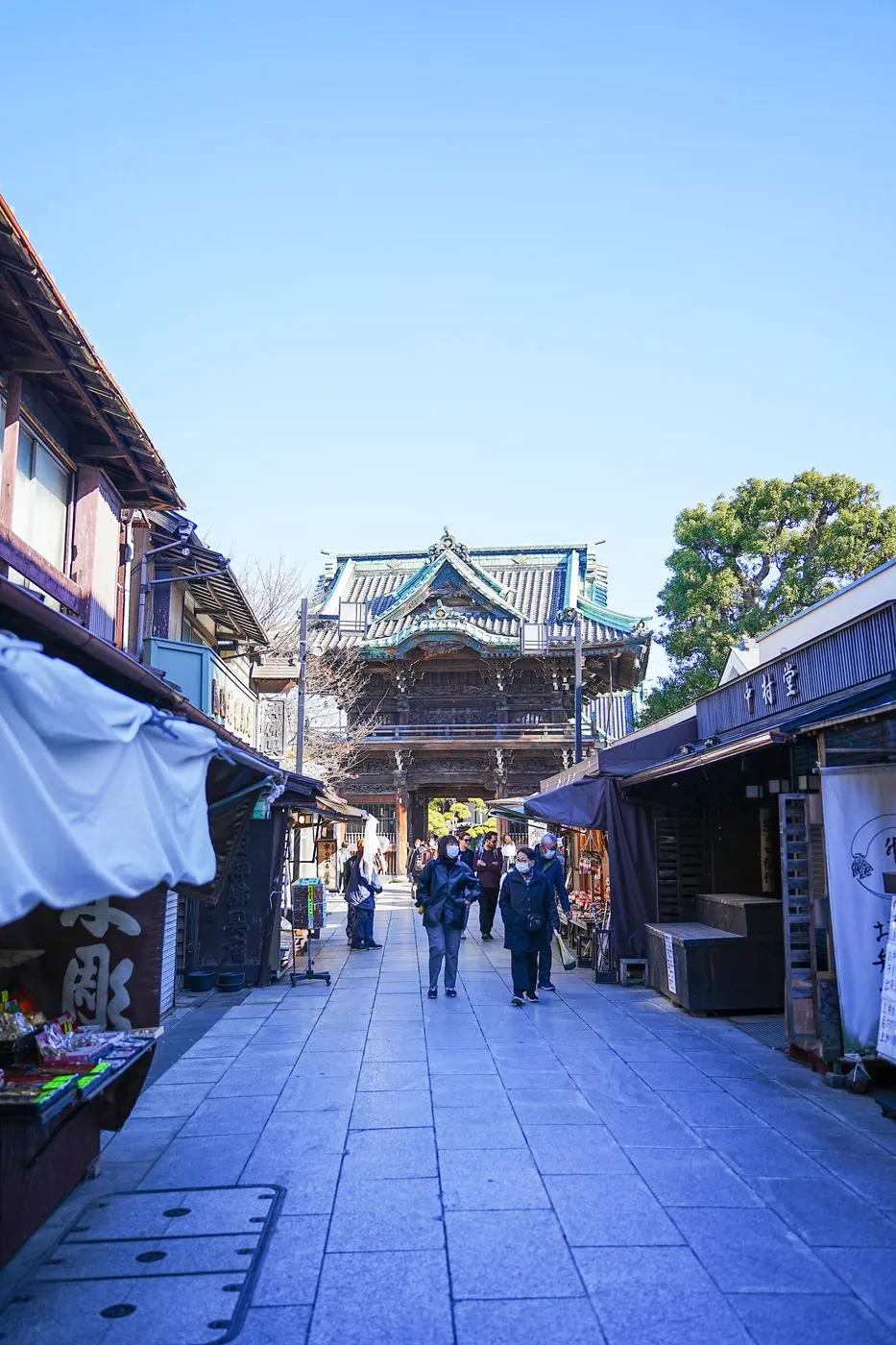
Shibamata is an old downtown neighborhood in Katsushika, on the eastern edge of Tokyo, about 30 minutes by train from Asakusa. In half a day you can walk from Shibamata Station along the temple approach, see the carved walls of Shibamata Taishakuten, drink matcha in the garden room of Yamamoto-tei, visit the Tora-san Museum and cross the Edogawa River on the Yagiri no Watashi ferry. Every stop on this route is within walking distance of the next.
This guide follows that route in order, with opening hours, admission and the days to avoid. Our house, Shibamata BnB, sits in the middle of it, so these are the streets we know best.
The route at a glance
Stop | Open | Admission |
|---|---|---|
Shibamata Station square | Any time | Free |
Taishakuten approach | Shop hours vary | — |
Shibamata Taishakuten (carvings gallery and Suikei-en garden) | 9:00–16:00 | ¥400 (temple grounds free) |
Yamamoto-tei | 9:00–17:00, closed 3rd Tuesday | ¥100 |
Tora-san Museum and Yamada Yoji Museum | 9:00–17:00, closed 3rd Tuesday | ¥500 |
Yagiri no Watashi ferry | 10:00–16:00 | ¥300 (children ¥100) |
Hours and prices are as of October 2026 and can change. Please check the official websites listed at the end of this article before you go.
Getting to Shibamata
Shibamata Station is on the Keisei Kanamachi Line, one stop from Keisei-Takasago. From Asakusa, take a Toei Asakusa Line train that continues onto the Keisei Line, ride to Keisei-Takasago and change to the Kanamachi Line. The trip takes about 30 minutes.
From Ueno, the Keisei Main Line also runs to Keisei-Takasago, where you make the same change. If you come by the Hokuso Line instead, Shin-Shibamata Station is about a 12-minute walk from the Tora-san Museum. We wrote a separate guide to Shin-Shibamata Station and its surroundings.
1. Shibamata Station: Tora-san and Sakura
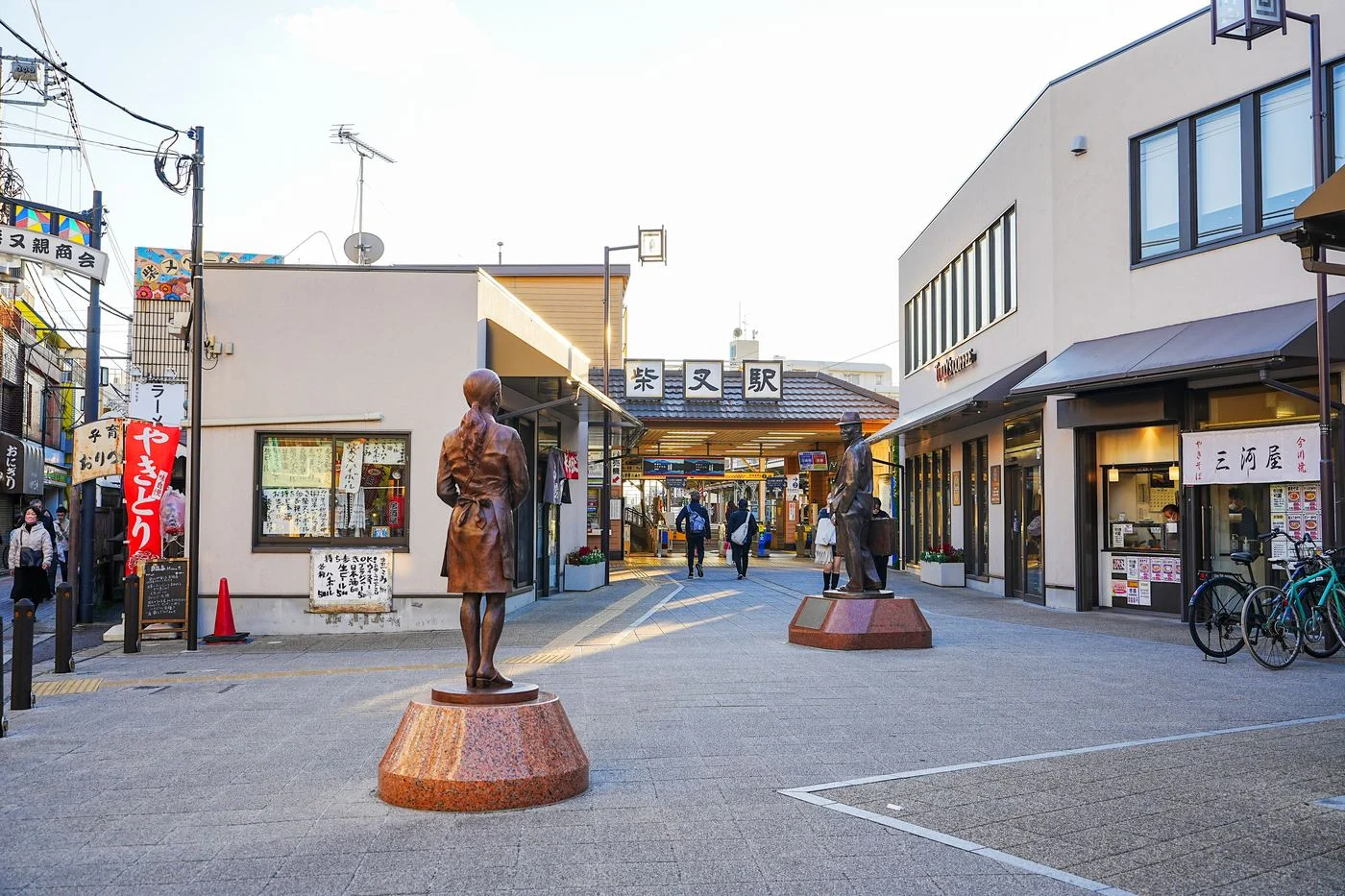
Shibamata is the hometown of Tora-san, the wandering hero of the film series “Otoko wa Tsurai yo” (It’s Tough Being a Man), which began in 1969. Right outside the station stands a bronze statue of Tora-san, put up in 1999. In 2017 a statue of his sister Sakura was added, turned toward him as if seeing him off on another journey.
It is the classic first photo of a Shibamata visit. From here, the shopping street that leads to the temple begins right across the square.
2. The Taishakuten approach: kusa dango and senbei
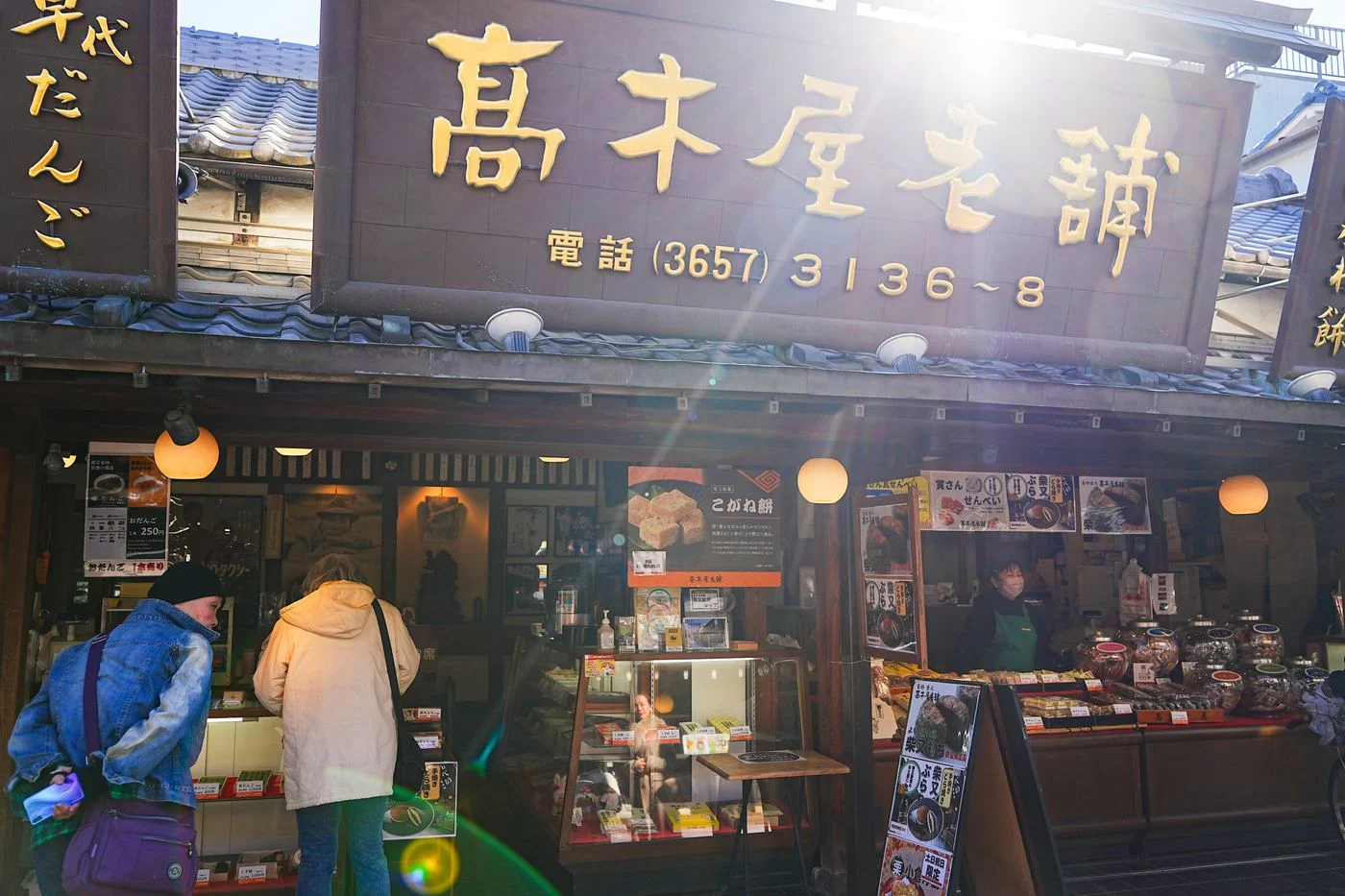
The approach (sando) runs from the station to the temple gate in about five minutes on foot, but most people take much longer. Old shops line both sides, selling kusa dango (rice dumplings made with mugwort, the specialty of Shibamata), senbei crackers, Japanese sweets and lucky charms such as kumade rakes and daruma dolls.
In the films, Tora-san's family runs a dango shop on this very street. If you only try one thing here, make it a skewer of fresh kusa dango with sweet red bean paste.
On Google Maps, the approach (Taishakuten Sando) is rated 4.4 from about 1,350 reviews (as of October 2026). The topics that come up most are Tora-san, the Showa-era atmosphere, kusa mochi and the old downtown feel, and buying kusa dango to take home is a common theme.
3. Shibamata Taishakuten
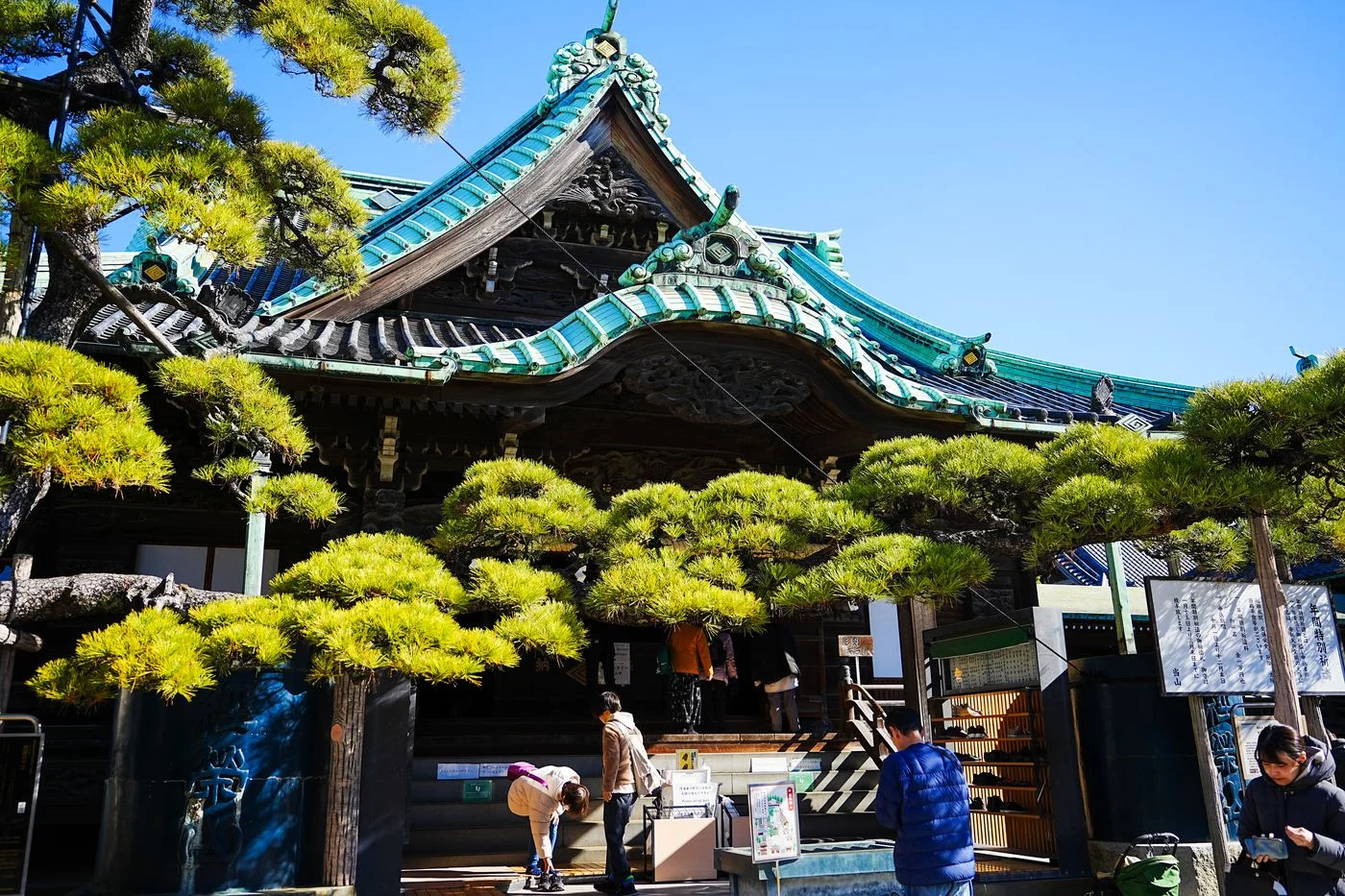
At the end of the approach, the Nitenmon gate opens onto the grounds of Shibamata Taishakuten (Daikyoji Temple). The grounds are free to walk around.
The highlight is the carvings gallery. The outer walls of the Taishakudo hall are covered with detailed wooden carvings that tell stories from the Lotus Sutra, and the gallery lets you walk around the hall and look at them up close. The same ticket lets you into Suikei-en, a Japanese garden that you view while walking around a covered corridor — a quiet contrast to the busy street outside.
On Google Maps, Shibamata Taishakuten is rated 4.3 from over 9,000 reviews (as of October 2026). Tora-san and the approach are mentioned most often, and the Taishakudo hall, where the carvings are, has its own listing with a rating of 4.7.
- Carvings gallery and Suikei-en garden: 9:00–16:00
- One ticket for both: ¥400 for adults, ¥200 for elementary and junior high school students
4. Yamamoto-tei
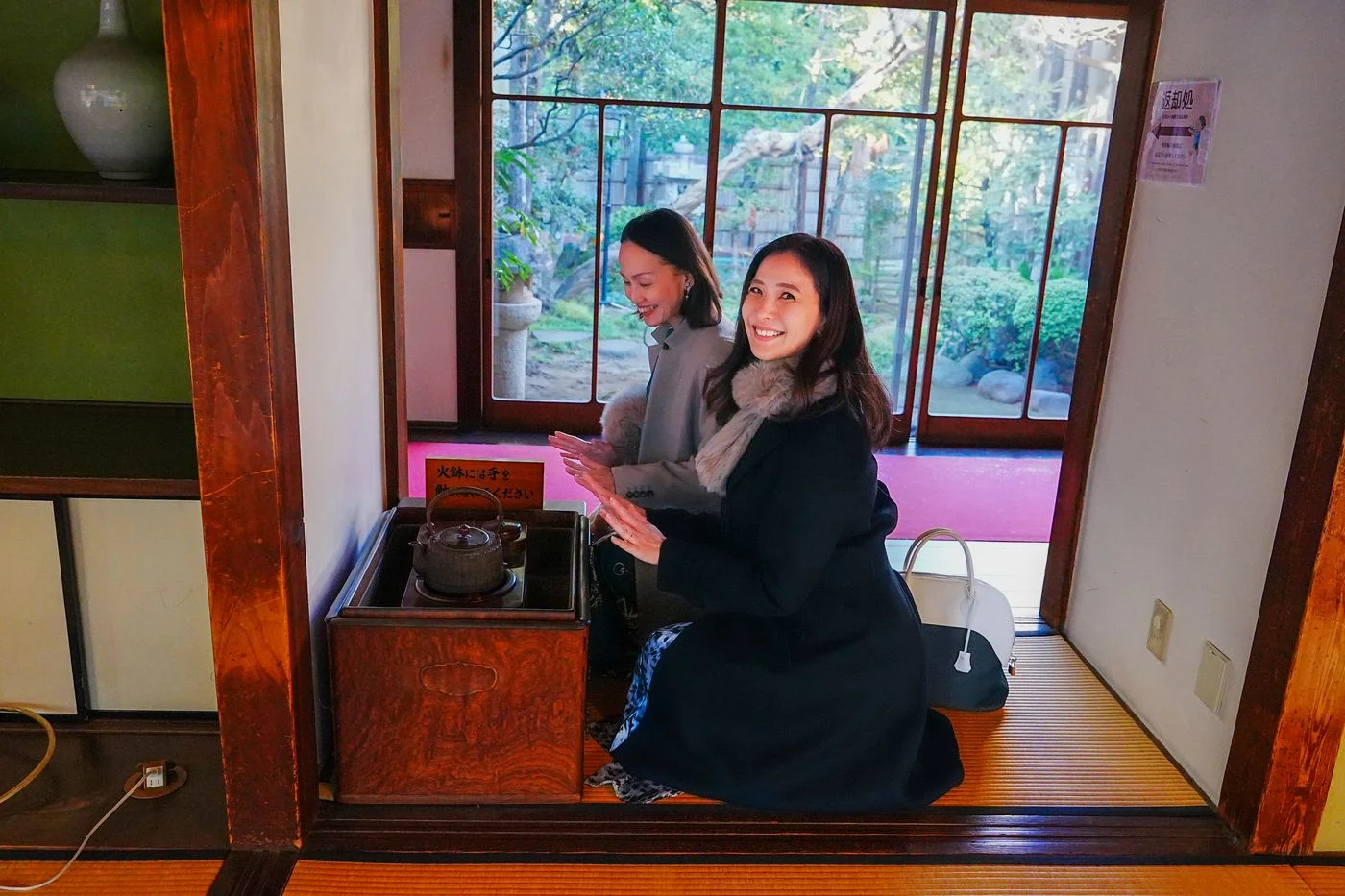
A short walk from the temple is Yamamoto-tei, a former private residence built from the Taisho into the Showa era. It is a traditional shoin-style Japanese house with Western touches: a reception room with stained-glass windows and floors laid with hexagonal tiles.
The garden is the main attraction and is highly regarded abroad. Sit in one of the rooms facing it and order matcha with a Japanese sweet (¥1,000). Admission to the house is only ¥100.
On Google Maps, Yamamoto-tei is rated 4.3 from about 1,500 reviews (as of October 2026). Matcha is by far the most talked-about topic, and many reviewers describe how calm it feels to sit in the tatami rooms and look out at the garden.
- Open 9:00–17:00
- Closed on the 3rd Tuesday of the month (the next weekday if that Tuesday is a holiday) and on the 3rd Tuesday, Wednesday and Thursday of December
5. Tora-san Museum and Yamada Yoji Museum
Next to Yamamoto-tei, along the Edogawa embankment, is the Katsushika Shibamata Tora-san Museum. Inside is the actual set of "Kurumaya", the family's dango shop, moved here from the film studio, along with a model of the Taishakuten approach as it looked in the 1950s and 60s, and costumes used in the films. The museum is renewed every three years; the most recent renewal was in April 2025.
One ticket also covers the Yamada Yoji Museum about the director of the series. Even if you have never seen the films, it is a warm look at everyday Tokyo life in the Showa era.
On Google Maps, the Tora-san Museum is rated 4.3 from about 4,100 reviews (as of October 2026). “Showa” is the most frequent topic: many reviewers enjoyed the nostalgic sets and everyday objects, and some say you can enjoy it even if you don't know the films.
- Open 9:00–17:00, same closing days as Yamamoto-tei
- Adults ¥500, elementary and junior high school students ¥300, seniors ¥400
- A combined ticket with Yamamoto-tei costs ¥550 for adults
6. Yagiri no Watashi: cross the Edogawa by boat
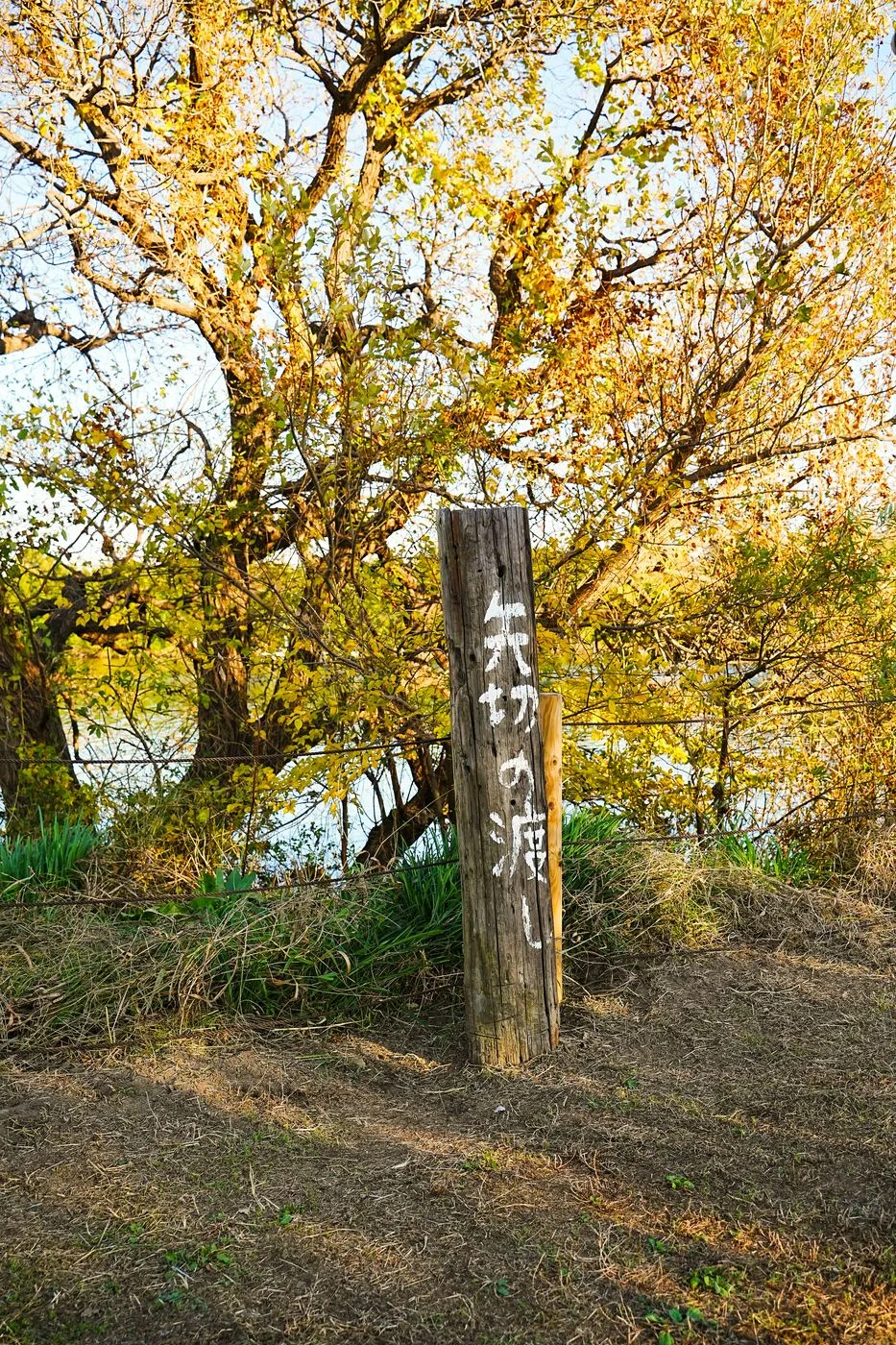
From the museum it is a short walk along the river to the ferry landing. Yagiri no Watashi is a small ferry that has carried people about 150 meters across the Edogawa River between Shibamata and Matsudo in Chiba since the Edo period. Together with Taishakuten, its sounds were chosen as one of Japan's 100 Soundscapes to Preserve. (As of 2024 the boat is no longer rowed by hand.)
On Google Maps, the Shibamata landing is rated 3.7 from about 480 reviews (as of October 2026). The boatman is the most talked-about topic, and many reviewers enjoyed his stories during the crossing. Some also say the landing is hard to find and that there is no timetable — the boat leaves when passengers gather — so check the map below and allow a little extra time.
- 10:00–16:00
- Mid-March to November: every day (closed Mondays and Tuesdays in July and August, except holidays)
- December to early March: weekends and holidays only (open every day from January 1 to 7)
- Junior high school students and older ¥300, children from age 4 through elementary school ¥100
- Cancelled in bad weather
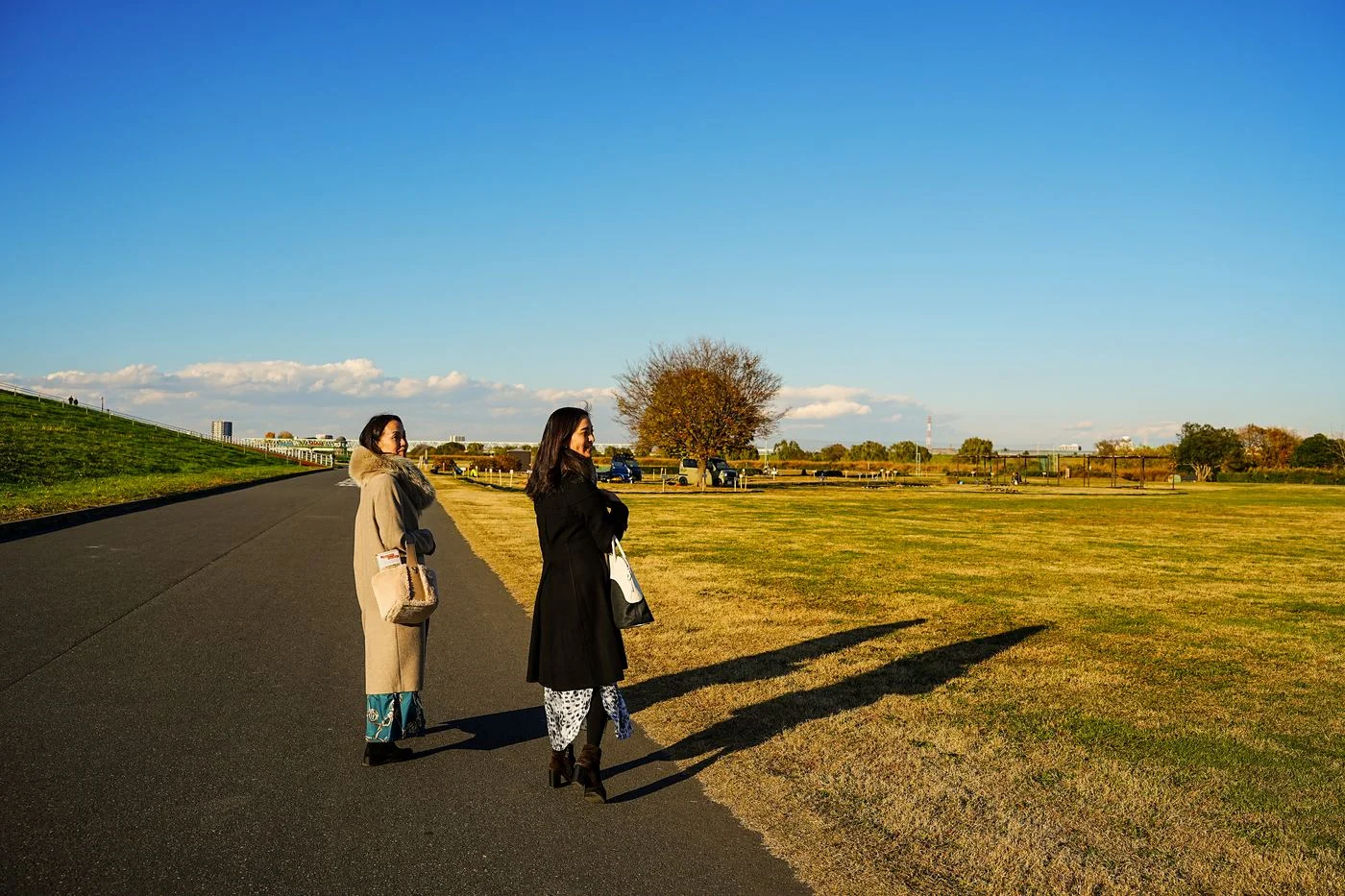
After crossing, many people simply walk along the riverbank. The open sky over the Edogawa is one of the best places in Shibamata to watch the sun go down.
A half-day plan
- 10:00 Shibamata Station: photos with Tora-san and Sakura
- 10:15 The approach: kusa dango
- 10:40 Taishakuten: carvings gallery and Suikei-en garden (about an hour)
- 12:00 Lunch on the approach
- 13:15 Yamamoto-tei: matcha facing the garden
- 14:15 Tora-san Museum and Yamada Yoji Museum
- 15:30 Yagiri no Watashi (the ferry runs until 16:00)
Two things to plan around: Yamamoto-tei and the Tora-san Museum are closed on the 3rd Tuesday of the month, and from December to early March the ferry runs only on weekends and holidays.
Staying overnight in Shibamata
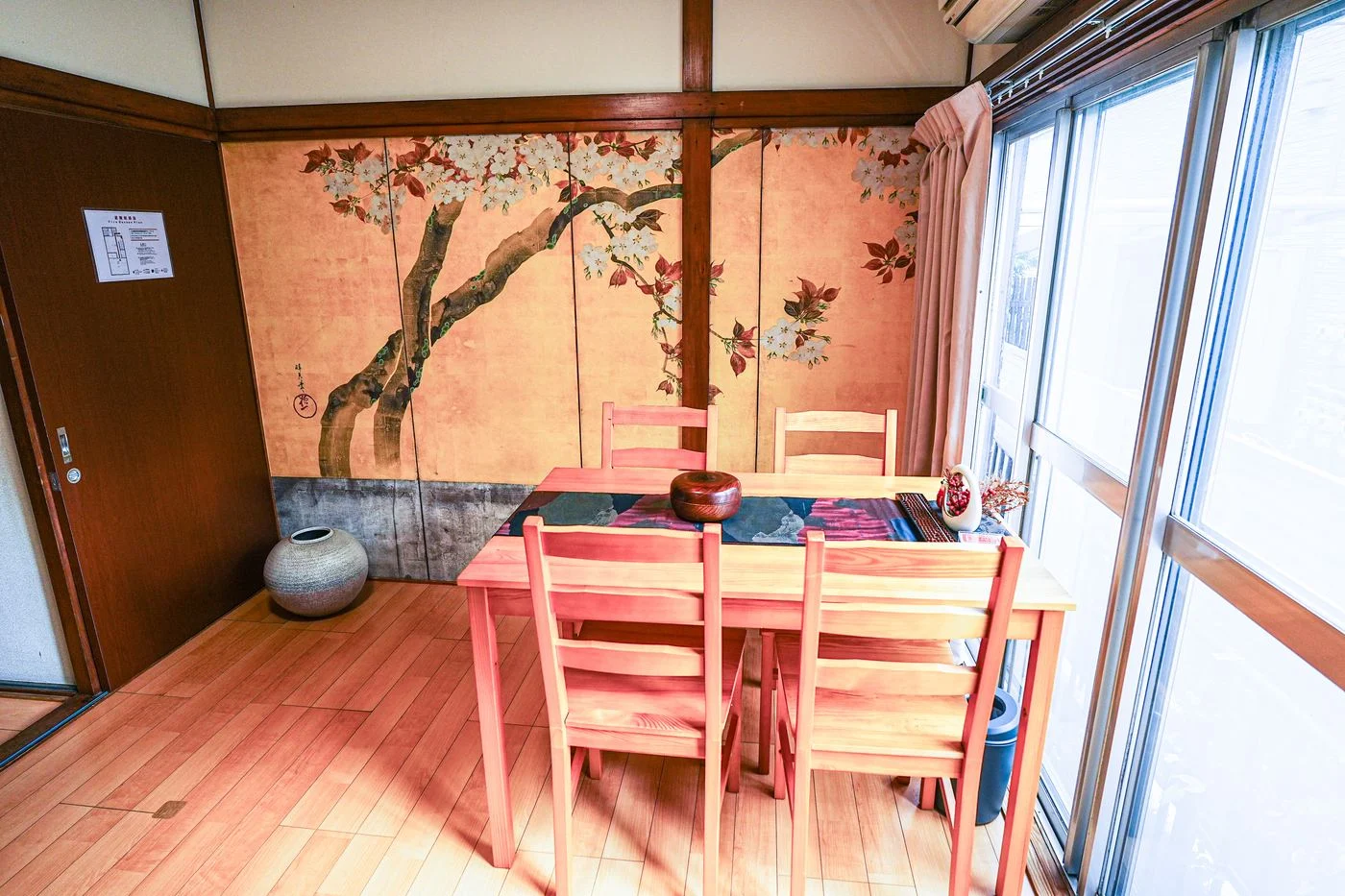
Shibamata is usually visited on a day trip, but the town has another face in the evening and early morning. At dusk the lanterns on the approach light up, and in the morning, before the shops open, the street is calm and almost empty. The gate of Taishakuten opens at 5:00, so you can visit the temple in the quiet of early morning.
Shibamata BnB is an entire private house a 3-minute walk from Taishakuten and Yamamoto-tei and a 4-minute walk from the Yagiri ferry. A convenience store, a supermarket and a coin laundry are all within 3 minutes on foot. See the house and the neighborhood.
FAQ
How much time do I need in Shibamata?
Half a day is enough for the route in this guide. With a full day you can add a slow walk along the Edogawa River.
Is Shibamata Taishakuten free to visit?
Yes, the temple grounds are free. The carvings gallery and the Suikei-en garden share one ticket, ¥400 for adults.
Does the Yagiri ferry run in winter?
From December to early March it runs on weekends and holidays only, and every day from January 1 to 7. It does not run in bad weather.
How do I get to Shibamata from Asakusa?
It takes about 30 minutes by train. Ride toward Keisei-Takasago and change there to the Keisei Kanamachi Line for one stop to Shibamata.